

LCME Piano Syllabus 2026 | Reflections, Favourites & New Discoveries
Alas, my good intentions to publish my review of the new LCME Piano Syllabus 2026 on launch day went slightly awry, as my copies failed to arrive until the day after. Ah well! But, perhaps the plus-side of that is that I’ve now had a couple of weeks to sit with the new books - and the syllabus as a whole - and reflect.
I want to acknowledge at the outset, that Andrew Eales over at Pianodao has written a very comprehensive review highlighting all the changes which have taken place as the new LCME Piano Syllabus appears on the scene, and I see no reason to duplicate his excellent points here - all of which I heartily agree with.
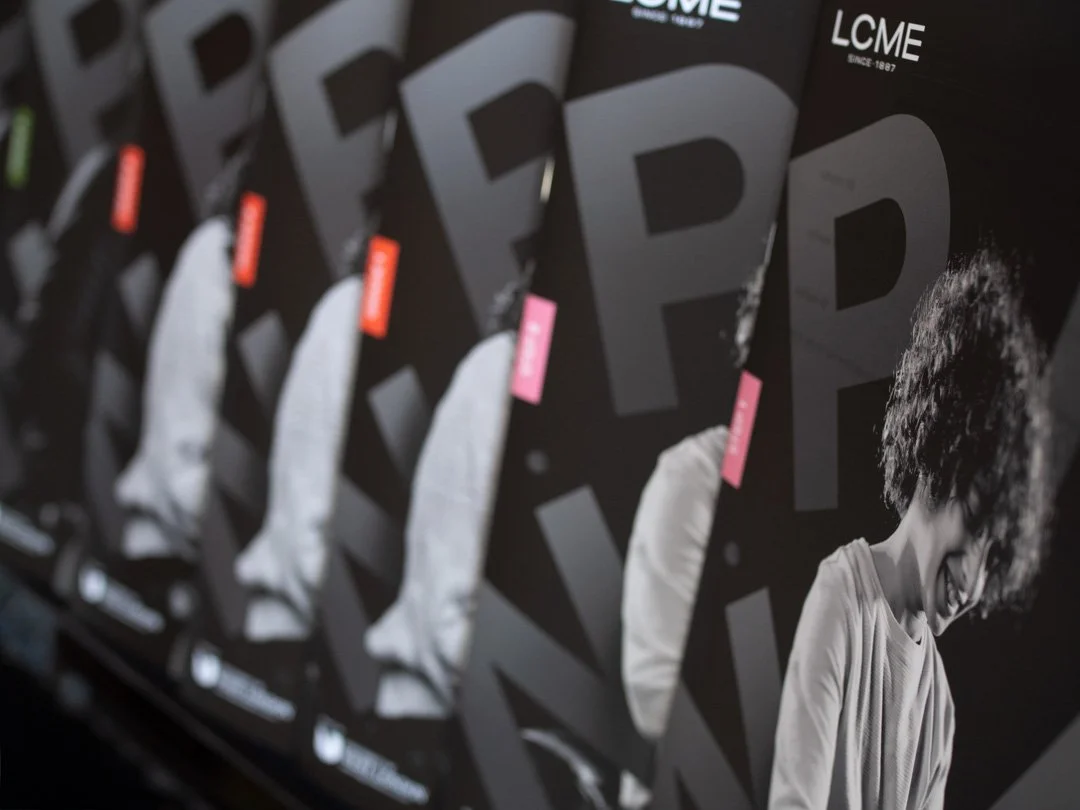
Suffice to say, the new LCME Piano Syllabus, for use from 2026 onwards, has been much anticipated. To summarise, the new syllabus introduces a number of significant changes and additions designed to support a more flexible, student-centred approach to piano learning and assessment. Alongside newly themed repertoire lists organised by musical character and skill, the syllabus includes a new Popular Piano option, allowing candidates to incorporate familiar music from a range of genres into their exams.
Perhaps most notably, LCME has introduced Keyboard Harmony as an alternative to sight reading - a practical musicianship test focusing on harmonisation, accompanying and improvisatory skills. The syllabus also places increased emphasis on diverse repertoire, clearer progression between grades, and broader accessibility through both printed and digital handbook editions, while maintaining an overlap period with the previous syllabus until July 2027.
First Impressions of the Publications
In this post, I want to look specifically at the publications and the repertoire included in the books - and on the alternative lists. For the first time in recent years, the publications no longer include the scales and arpeggios, aural tests, sight-reading examples and discussion questions - these are available elsewhere and as digital downloads. There are pluses and minuses to this, but it does mean that the LCME Piano Handbooks 2026, particularly at the higher grades, are of a more manageable thickness - and importantly as a result, lie flat on the music stand!
LCME has sought to strike a balance between familiar favourites and new discoveries, and on first look, this seems broadly successful. It’s important to note that these Piano Handbooks offer a wide selection of pieces creating a set of useful anthologies, whether players intend to sit the exams or not.

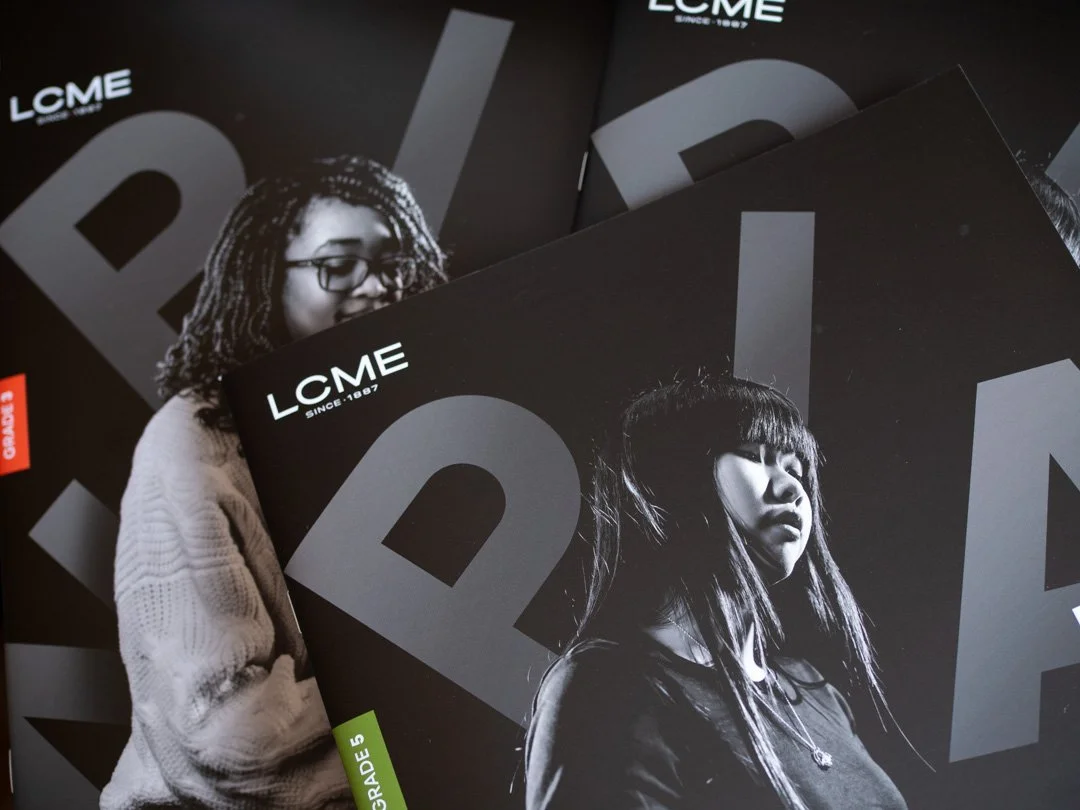
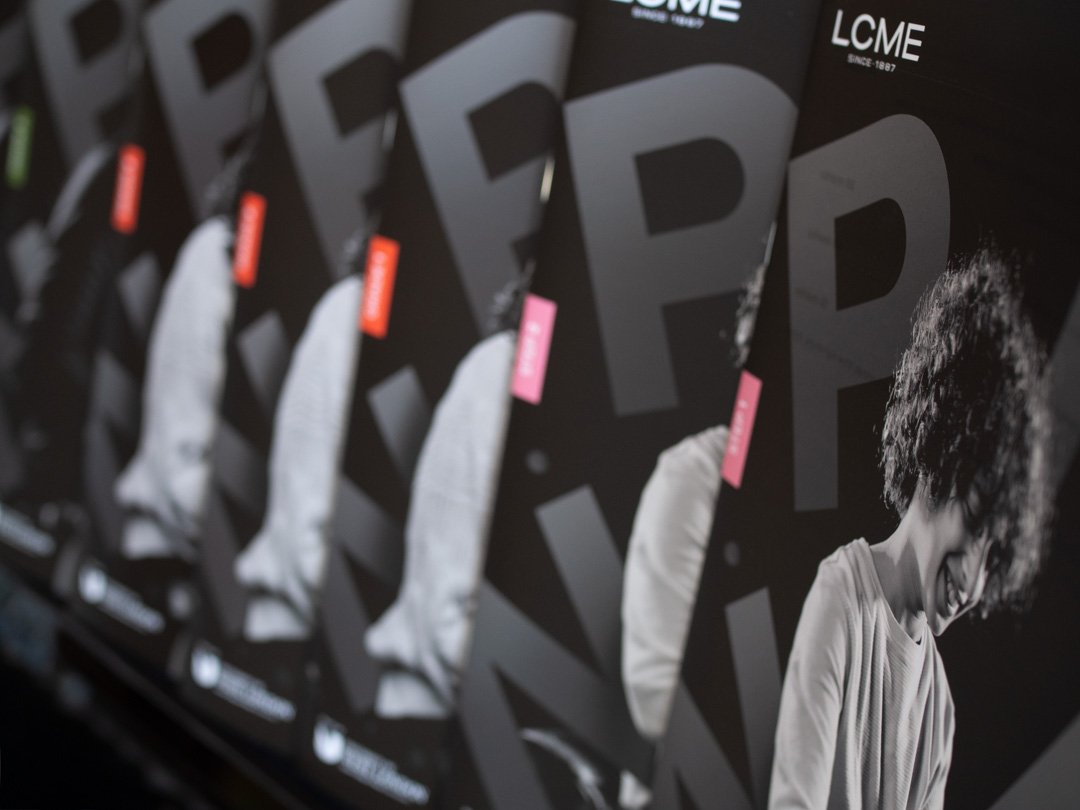
The quality of the publications is excellent, and much work has clearly gone into the presentation, including the eye-catching matt-finish covers. I particularly liked the colour coding of the books into three levels: foundation (Grades 1-3), intermediate (Grades 4-5) and advanced (Grades 6-8), offering a useful reminder of these divisions.
A few useful additions and adjustments have been made, including:
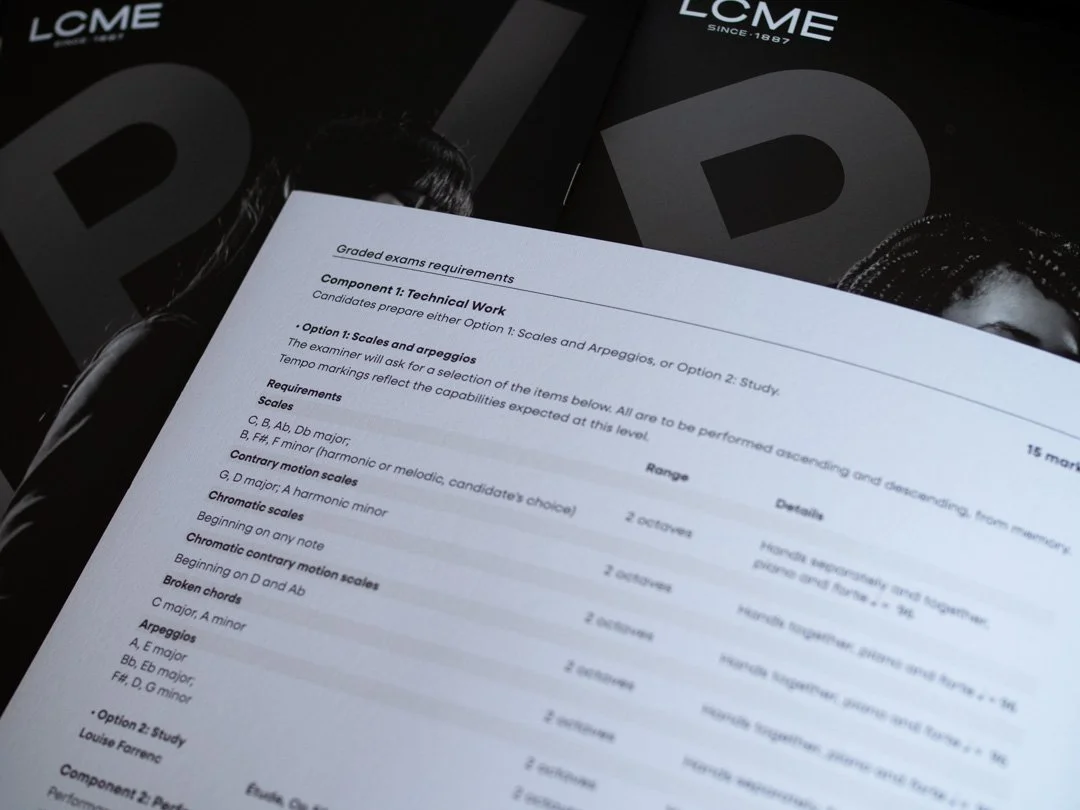
Printing the full exam requirements on the inside cover, including requirements for the scales and arpeggios.
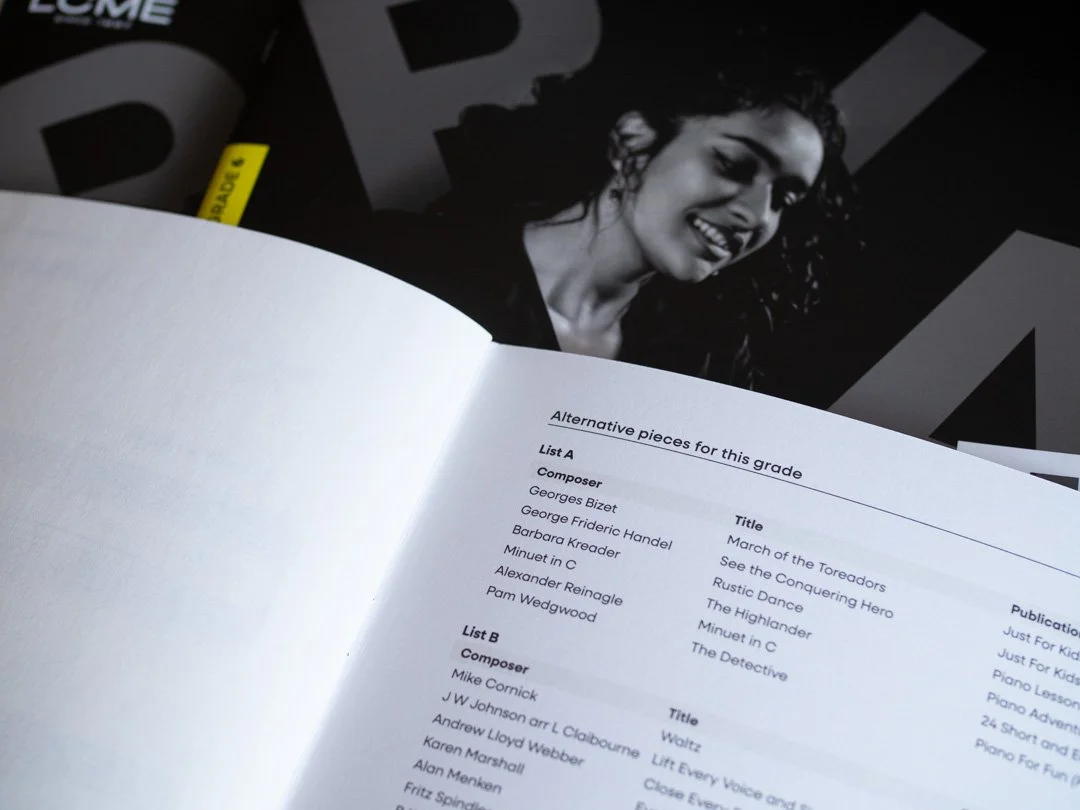
Presenting the alternative repertoire list inside the back cover.
Including the performance notes in a single section, which I think ultimately gives rise to better page turns throughout.
As mentioned above, the higher grade books are now a more manageable thickness.
Repertoire Discoveries
Ultimately, for all our discussion about the publications, the scale requirements and the addition of a keyboard musicianship test, the talk of the town will almost always be about the repertoire itself.
LCME has placed particular emphasis on the breadth and character of the repertoire, promising a diverse and internationally representative selection of music across all grades. Alongside established pedagogical favourites and core classical works, the new syllabus seeks to introduce music by a wider range of contemporary composers - including greater representation of women composers and newer musical voices - with repertoire designed to balance technical development, musical imagination, and genuine enjoyment at the piano.
There are some big promises here, but are they born out in practice?
I’m going to focus here on the main Grades 1-8 as I know in his review, Andrew has highlighted some of the main changes at Steps 1 and 2.
LCME Grade 1 Piano
Grade 1 is always an important one because for many, it will be the start of their music exam journey. Getting the pieces right is a tough ask, but I think LCME has succeeded. There is a good mixture of styles with an excellent balance of established repertoire and new discoveries. For example, I was pleased to see a piece from Christopher Norton’s much-loved Microjazz series appearing - hopefully this might be the gateway for a new generation of Microjazz fans.
I want to give a particularly big thumbs up to Samuel Arnold’s Gigue which is one of my favourite teaching pieces! Overall, much-loved composers such as Schumann and Bartok sit alongside contemporary and lesser known works in harmony.
My top three choices:
List A - Arnold: Gigue
List B - Schumann: Little Piece
List C - Norton: Stairway
LCME Grade 2 Piano
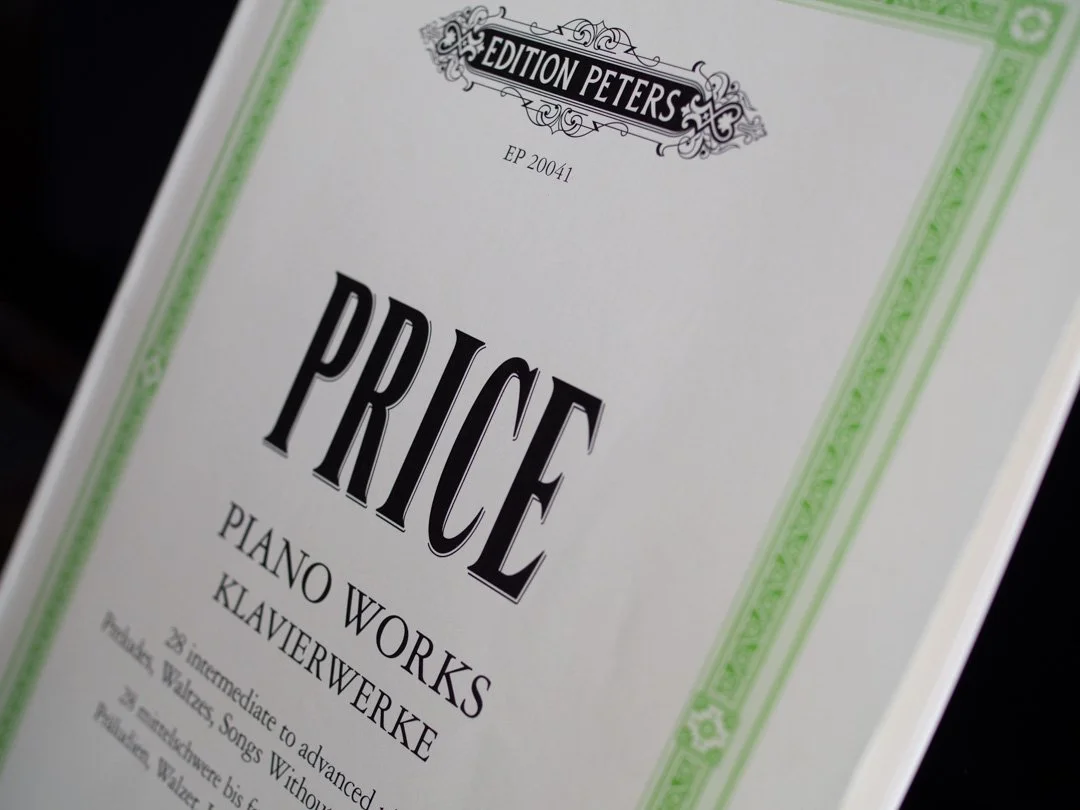
I wanted to make mention of the fact that rather than being ‘token’ additions at the higher grades, women composers are represented from Grade 1 upwards, with Florence Price appearing there, and Elisabetta de Gambarini at Grade 2. This feels like good progress.
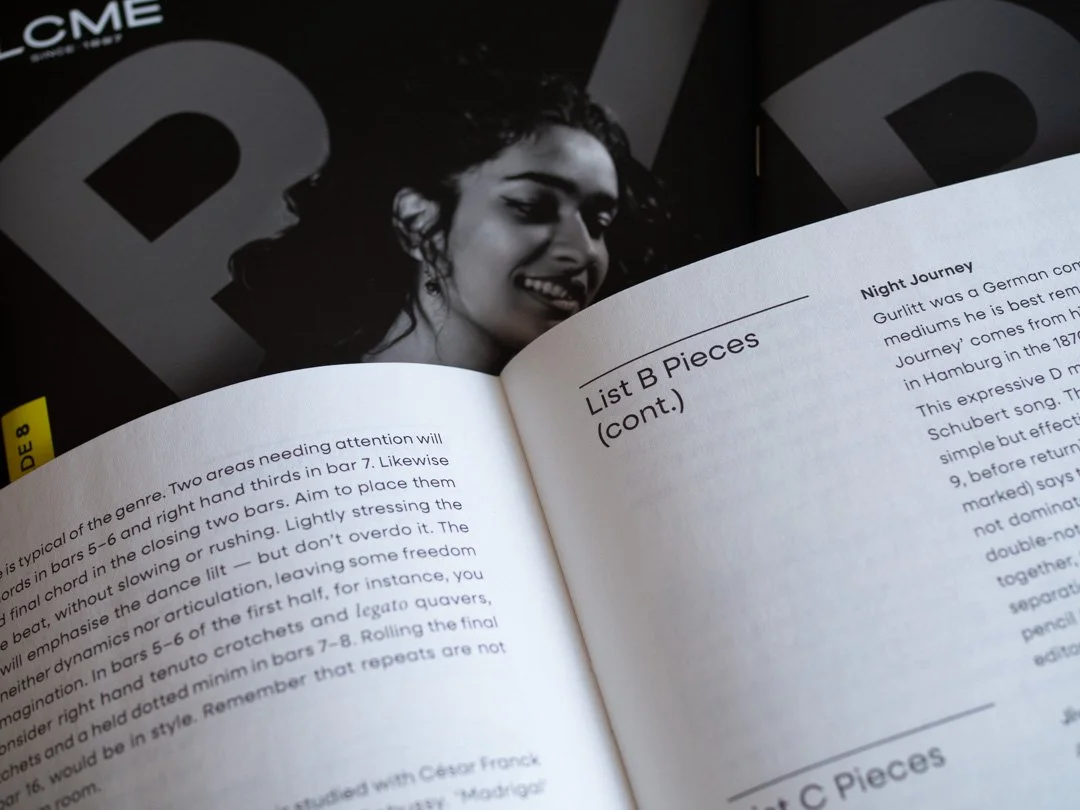
Strangely, I felt like this is how piano exam syllabuses used to be - these repertoire selections feel warmly familiar - like those I was teaching 25 years ago. I hasten to add, the repertoire selections for the 2026 LCME Piano Syllabus remain fresh and alive - but by including works by composers such as Cornelius Gurlitt, largely abandoned by other exam boards, these selections take the best of the past to sit alongside the present.
My top three choices:
List A - Elisabetta de Gambarini: Minuetto
List B - Gurlitt: Night Journey
List C - Kabalevsky: Folk Dance
LCME Grade 3 Piano
LCME promised the inclusion of core classical works, and at Grade 3, as with other grades, this ambition is realised. Old favourites such as Clementi’s ‘Allegro’ from his Sonatina in C, Reinecke’s ‘Vivace’ from his Sonatina in C, and Burgmüller’s Sighing, all find a justly deserved place at Grade 3.
I think it’s also important to note that whilst LCME has included plenty of contemporary works, these aren’t all jazz. I really welcome this because contemporary doesn’t have to automatically mean jazz and blues! Elena Kats-Chernin’s Eliza’s Aria and John McLeod’s Dragon Dance are perfect examples of this.
My top three choices:
List A - Clementi: ‘Allegro’ from Sonatina in C
List B - Metelka: Snowflake
List C - McLeod: Dragon Dance
LCME Grade 4 Piano
I mentioned above that the 2026 LCME Piano Syllabus felt strangely familiar - in the best possible way. I kept seeing pieces to which I silently exclaimed “I remember that!” Georg Benda’s Sonatina III in A minor is a great example of this - proof that there is still a place for these ‘older’ pieces, and it’s still possible to offer something for everyone.
In the past, I have levelled criticism at all exam boards for failing to recognise that adults sit the lower grades as well as children, the consequence being that the early-grade repertoire can appear ‘childish’. I’m pleased to say that no such criticism can be levelled at LCME here - perhaps one of the great successes of this syllabus is their ability to choose repertoire with almost universal appeal.
My top three choices:
List A - Benda: Sonatina III in A minor
List B - Traditional, arr. Önaç: Deep River
List C - Bell: Mango Merengue
LCME Grade 5 Piano
I appreciate that for all exam boards, it’s no easy task to choose just the required number of pieces from the syllabus to include in the associated graded books, in this case the LCME Piano Handbooks. Teachers in particular will always have views about this!
On the whole, I think LCME has got the balance right here. They have chosen three pieces from each of Lists A, B and C (four pieces at Grade 8) and I reckon they’ve done a great job of balancing old with new. This is born out at Grade 5, where Handel, Bach and Schubert sit alongside less familiar and contemporary works with ease.
My top three choices:
List A - Bach: Prelude in D major, BWV 936
List B - Camilleri: Cantilena
List C - Proudler: Turnabout Rag
LCME Grade 6 Piano
I’ll be honest, by Grade 6, I began to wonder what else I could say - decision fatigue easily sets in! I’ve focussed here on the repertoire included in the Piano Handbooks, but it’s worth noting that there are additional choices in other books, and also in LCME’s previously-published Piano Anthology volumes. These additional pieces are always worth a look, yet are often overlooked.
It’s good to see pieces on the alternative lists from books published in recent years, notably at Grade 6, from The Willis Student Recital Collection (which I reviewed here), Nikki Iles’ Jazz on a Winter’s Night and Pam Wedgwood’s Piano Dreaming.
My top three choices:
List A - Khachaturian: ‘Étude’ from Pictures of Childhood
List B - Pedersen: Now Think
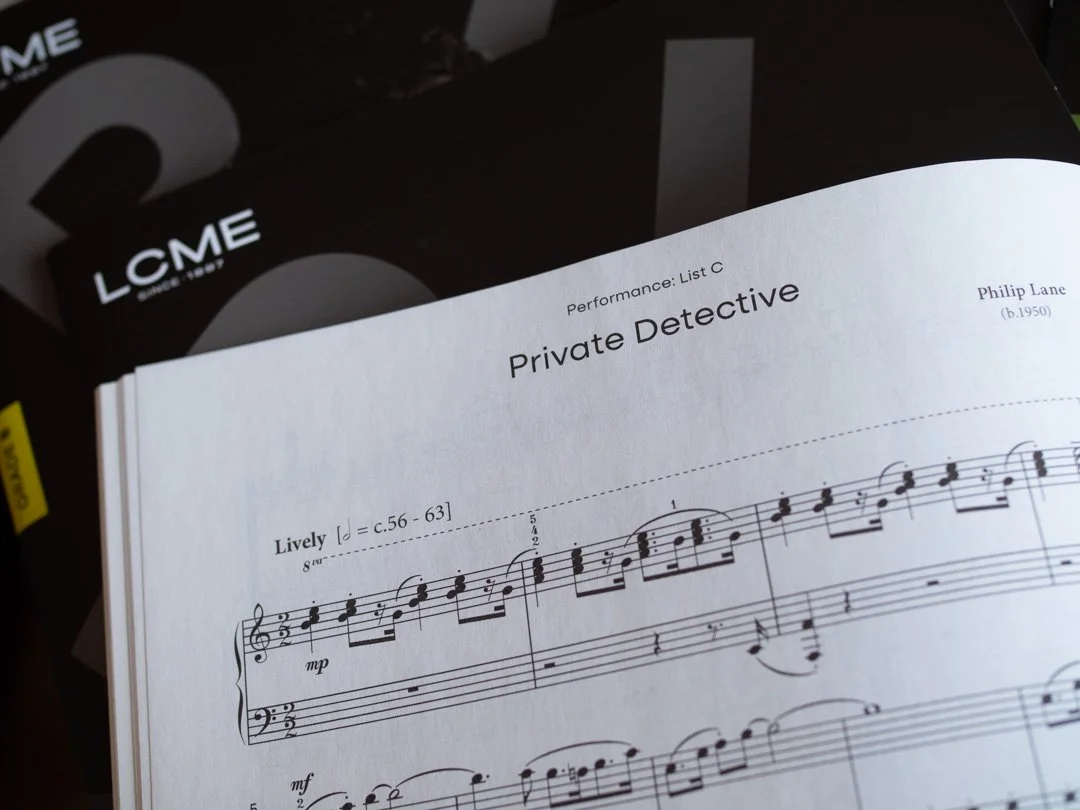
List C - Lane: Private Detective
LCME Grade 7 Piano
I’ve got to be honest, the repertoire selections at Grade 7 feel more ‘meaty’ than the previous syllabus - and those of other boards. It feels like it’s been a long time since we had Bach, Beethoven, Daquin and Mendelssohn all in one graded exam book!
I get the impression that LCME has done a bit of work in terms of rediscovering pieces which probably appeared on syllabuses of years gone by - I suspect this is certainly the case with Alex Rowley’s Into the Icy Blast. This is a syllabus of discoveries as well as rediscoveries.
My top three choices:
List A - Daquin: Le Coucou
List B - Andrée: Om Kvällen
List C - Iles: Mwanzo
LCME Grade 8 Piano
Grade 8, often seen, perhaps unjustly in itself, as the pinnacle of a student’s progress, is as important in its repertoire choice as Grade 1. I think I accept that whenever I write these reviews of exam syllabuses, there will be many who think the boards have gone too far, and others who think they haven’t gone far enough.
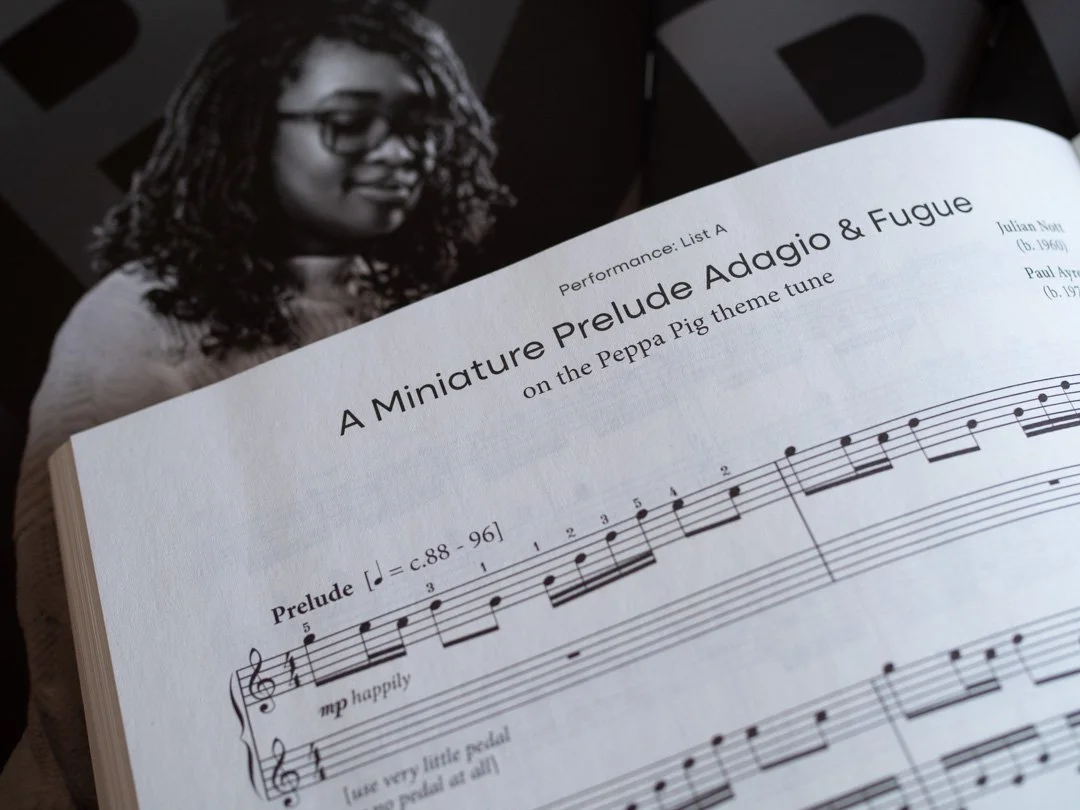
Beethoven and Haydn understandably appear, but I reckon the hit of the entire 2026 LCME Piano Syllabus will be Paul Ayres’ genius reworking of Julian Nott’s music in A Miniature Prelude, Adagio & Fugue on the Peppa Pig theme tune. What more can you say!
My top three choices:
List A - C. Schumann: Prelude and Fugue in G minor
List B - Lyadov: Prelude in D flat
List C - Holt: Nora’s Dance
Closing Reflections
In my review of the 2025-26 ABRSM Piano Syllabus, I questioned whether we should be throwing the baby out with the bath water. I’m pleased to say that when it comes to the 2026 LCME Piano Syllabus, no such accusation can be made - in fact, I’d say they’ve done a good job of keeping the water warm.
I noted that unlike some other piano syllabuses in recent years, this one isn’t too arrangement heavy. There are arrangements, but those included in the Piano Handbooks are limited in number. I also noted that a good range of publishers were presented, in addition to a number of contemporary publications which will already be the mainstay of some teachers’ libraries.
Over the past few years, LCME has come under criticism on a number of fronts - perhaps some more justified than others. It has, at times, felt like a sinking ship, but the new 2026 Piano Syllabus might just be the steadying anchor it needs. As they seek to rebuild bridges with teachers, I hope that the popularity of the syllabus will offer scope for far greater availability of exams and venues for us all - at home and abroad.
Overall, the 2026 LCME Piano Syllabus feels like meeting an old friend again - despite our time apart, we can warmly shake hands, and pick up where we left off. This syllabus feels like it’s taken the best from those repertoire selections of 10-20 years ago, and combined it with the best of the present.
To my mind, LCME has struck the perfect balance between old and new. They made some strong promises at the outset, but they have more than lived up to them. Much work and thought has clearly gone into the repertoire selection, and it shows. Other exam boards will now have much to live up to for the bar has been set high.
LCME Piano Syllabus 2026 was published in 2026 by LCM Publications. 10 books are available covering Steps 1-2 and Grades 1-8.
I was sent a review copy of these books free of charge; however, this review is my honest opinion as a teacher. You can find my Reviews Policy here.
If this entry in The Notebook has encouraged or supported you, you are warmly invited to buy me a virtual coffee on Ko-Fi. Support starts from just £3 - whether as a simple one-off gift or a monthly subscription - helping this freely offered work to continue and quietly grow.

Quirky and intriguing, Rob Hall’s Underground for solo piano, is well worth a look.