
Music Exam Mark Sheets: Lost in Translation
I’m sure I’m not the only music teacher who’s spent many years attempting to not only decipher the comments included on the music exam marksheet, but also translate them into something meaningful for the student. For years, the language used by examiners when writing on the music exam marksheet has been contentious. For a long time, it was the handwriting which perhaps caused most problems, and although this has, in many cases, been remedied by having typed mark sheets, I would suggest that the language being used is still far from ideal.
A Challenge or a Problem?
I want to preface this post by saying that in any ways, this isn’t a criticism of most examiners. I fully understand that they are under significant time pressure, and also, thinking of lots of different ways to say the same thing must be challenging. I also appreciate that examiners want to make the comments seem as positive as possible, and the choice of language has a huge impact on this. After over 20 years’ entering students for music exams, the language of the mark sheet is still problematic, and talking to other teachers, I’m not alone in this respect.
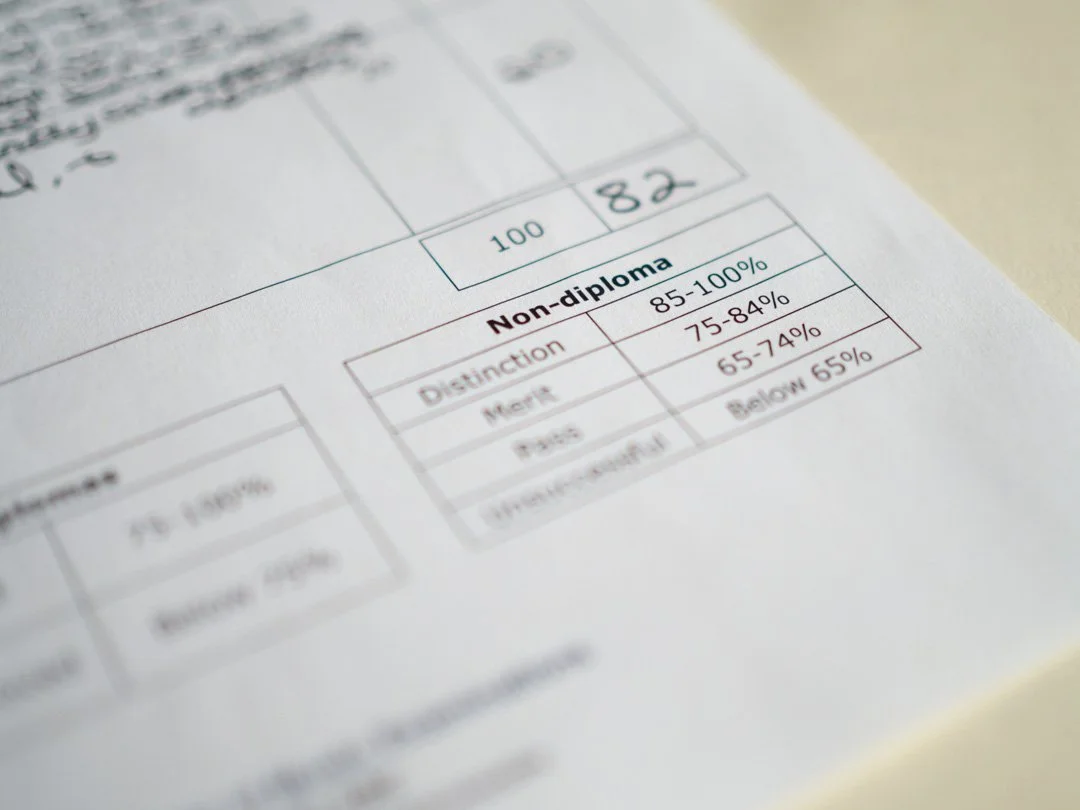
I’m not entirely sure why the problem remains, and why, well into the 21st century, we cannot use what we might call ‘plain English’. In many respects, I’m sure some of the comments must take much longer to write than the ‘plain English’ version. Whilst one board in particular is especially prone to this type of language (and I’m sure you can guess which it is), the others are certainly not immune.
I wanted to share some particular examples from marksheets I’ve received over the years. They have, where necessary, been altered as to not identify a particular student.
"The music flowed along in a mellifluous fashion”
Now, I like words, and I enjoy finding out more about them and their history. But I have to confess, when this one came along, I had no idea what ‘mellifluous’ meant and had to look it up. It is, apparently, ‘pleasingly smooth and musical to the ear’. It’s a lovely word, but if I don’t know what it means, is my 13-year-old Grade 2 likely to know?
"technical reservations impeded complete integrity”
To me, this is a classic example of how do I translate into something meaningful for a student? I’m not sure I even understand it myself. I wonder how the examiner might have defined ‘complete integrity’? I can only assume that perhaps the student’s technique didn’t fully support the demands of the music which is an entirely fair comment, but why not say that? I don’t think it sounds any more or less negative than the indecipherable comment above.
“There were extensive tonal blemishes”
I don’t know whether other teachers find this, but we seem to go through phrases where examiners have particular buzzwords and phrases. At one time, it was ‘tonal blemish’ which appeared on various different marksheets for several consecutive sessions. A ‘tonal blemish’ could be a wrong note, a note with poor tone, or even a note not in tune, but without clarity, is such a comment useful to the student?
“Articulation projected the phrases, and the dotted figures were neatly sounded within their rhythmic units with the characteristic upward motifs generally controlled, and the varying light and shade contributed to an overall clear cantabile line.”
Sometimes, the sentences are just too long, never mind the language used. Where do you start with this one, in this case for an 11-year-old Grade 1 student.
“There was scope for more tonal presence but scope to expand the tonal palette”
This comment was for a 12-year-old Grade 3 student. As I read the marksheet, I remember thinking to myself, how do I explain ‘tonal presence’ and ‘tonal palette’ to my student? For that matter, do I even fully understand these myself?
“You were extra sensitive to the implications of in the changing harmonies”
Here, for a Grade 1 Piano, this comment seems fairly positive, though I am left wondering what the implications were that were conveyed extra sensitively.
Concluding Thoughts
Let’s be honest, some of this is laughable, but I think there’s an important point to be made here. As I wrote in my PhD, it has been argued that knowledge, language and power are inextricably linked. The more specialised a language, and the more complex the terminology used, the more exclusive that knowledge becomes (Barton, 2020, p.86). This can be used as a way to govern and ensure obedience to a given and accepted system. As Foucault (1979) argued, knowledge is power, and power can often be wielded through the use of language. Are some examiners seeking to wield their power through the use of language? Do comments such as some of those outlined above create an environment in which some feel the need, through their use of language, state their superiority? In the main, I don’t think this is the case, but I wonder if some of it is even subconscious.
So, where do we go from here?
There seems little hope of the language changing anytime soon, and despite it being highlighted on a fairly regular basis on social media, there seems little appetite from exam boards to investigate it.
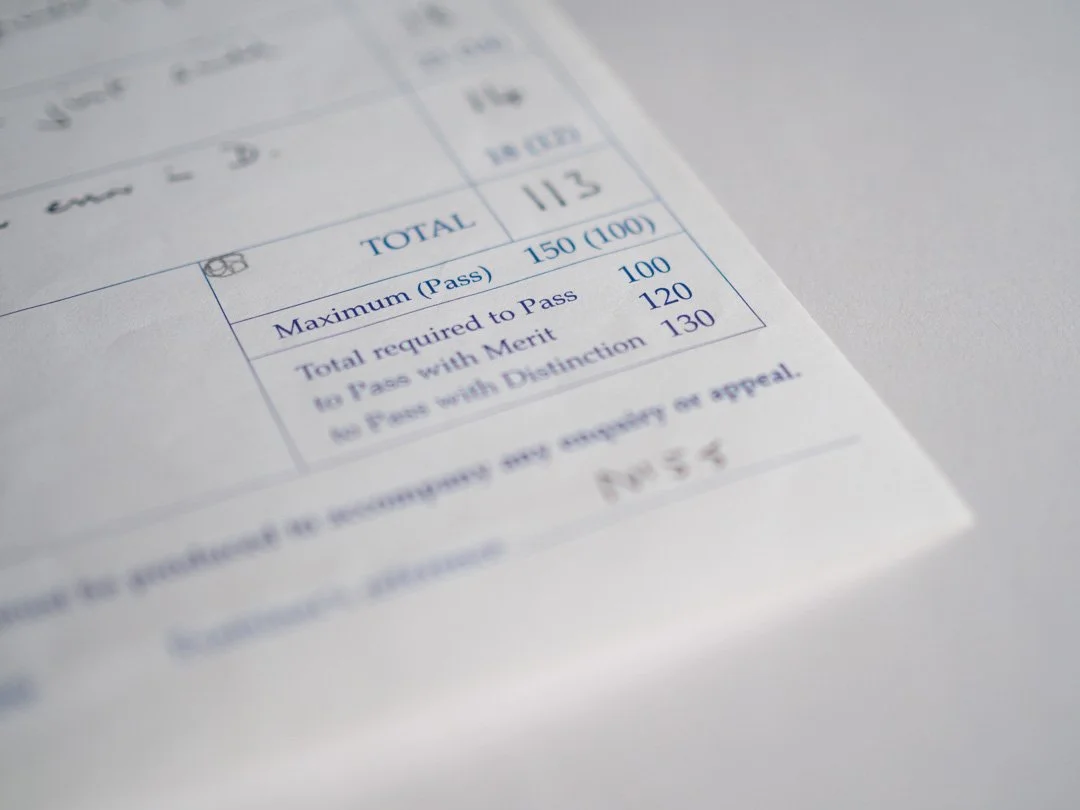
Perhaps there’s a bigger issue to consider in terms of the purpose of the exam marksheet. In my view, it should provide useful, constructive and meaningful feedback on a candidate’s performance. Negatives should always be balanced by positives, but in as authentic a way possible.
References:
Barton, D.C.M. (2020). The autonomy of private instrumental teachers: its effect on valid knowledge construction, curriculum design, and quality of teaching and learning. Unpublished PhD thesis. Royal College of Music, London.
Foucault, M. (1979). Discipline and Punish: The Birth of the Prison. London: Penguin Books.
If this entry in The Notebook has encouraged or supported you, you are warmly invited to buy me a virtual coffee on Ko-Fi. Support starts from just £3 - whether as a simple one-off gift or a monthly subscription - helping this freely offered work to continue and quietly grow.



Perhaps you don’t need to attract more students. Perhaps you simply need to become a little clearer about which students are right for you.