
Flute Sight-Reading: A Progressive Method | Sheet Music Review
I’ve reviewed a lot of sight-reading books for piano in my time, but never any for flute sight-reading - so this is a very welcome change! These new books from Trinity, Flute Sight-Reading: A Progressive Method, seek to provide everything a candidate needs in order to prepare for the sight-reading element of their graded flute exams, from Initial to Grade 8. I would, however, venture to suggest that the value of these books goes well beyond the exams themselves.
What the Series Covers
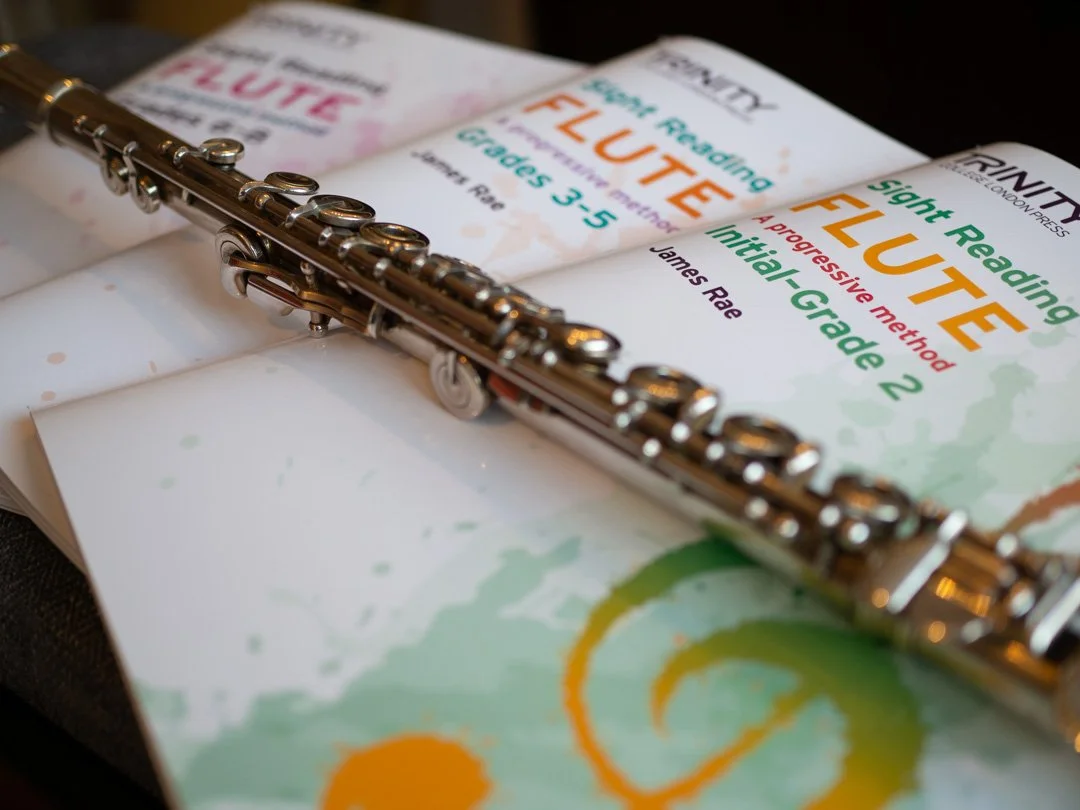
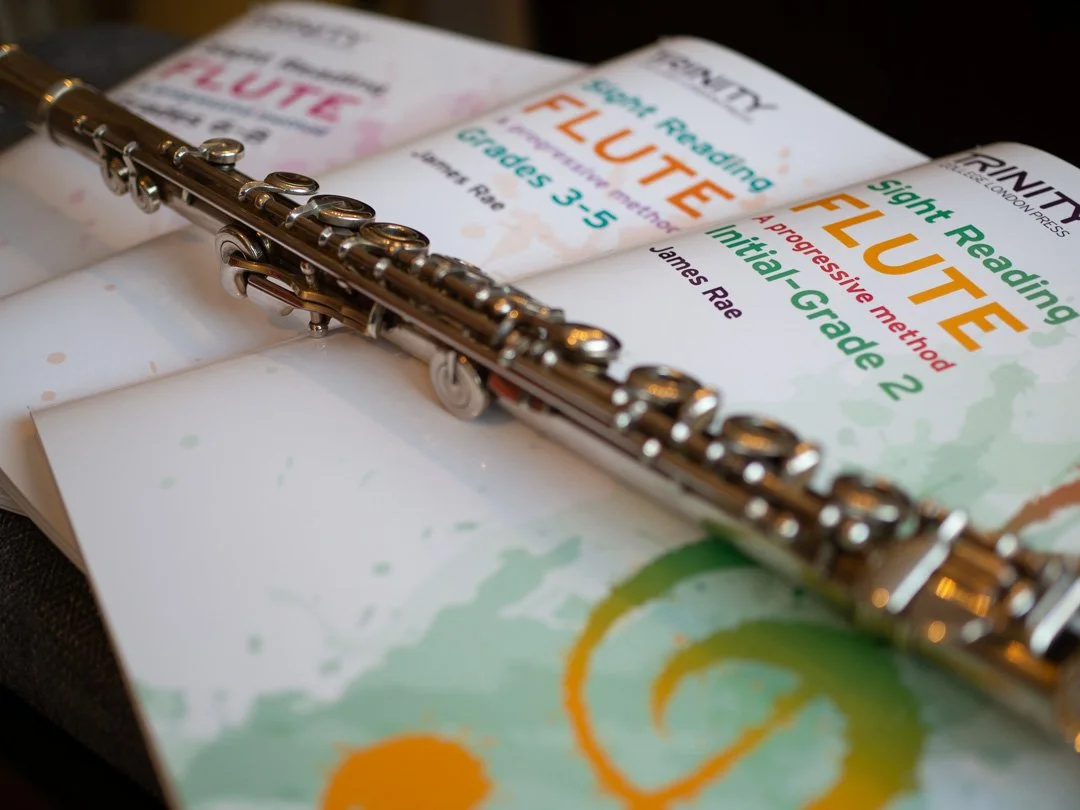
The three books in the series cover:
Book 1: Initial to Grade 2
Book 2: Grade 3 to Grade 5
Book 3: Grade 6 to Grade 8
For each grade, 10 sequential lessons are offered, with a step-by-step approach to sight-reading, leading to a teacher-student duet. At the end of each grade, example sight-reading tests are given.
James Rae is a name well-known, not just to flautists, but to woodwind players all over the world. He has written and produced countless books, all very much in regular use by teachers and students. He has, if you like, got his ‘finger on the pulse’.
Connecting Theory with Practice
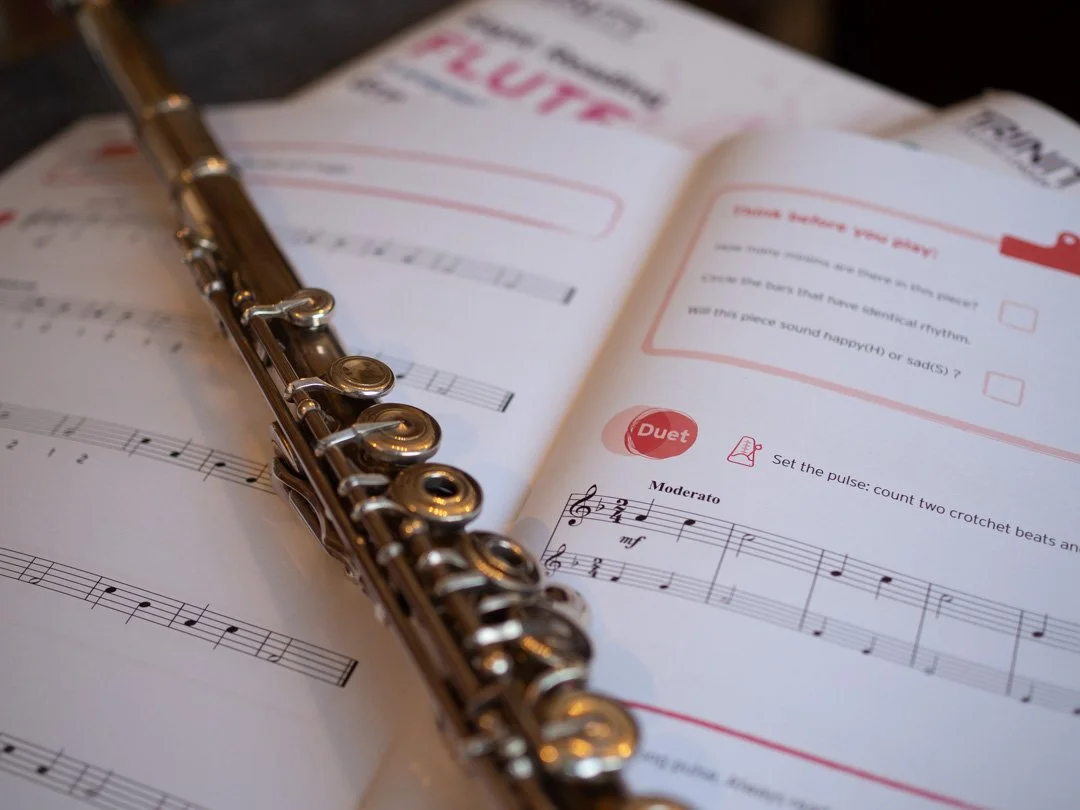
As with other Trinity publications, one thing I particularly like about Flute Sight-Reading: A Progressive Method, is that they seek to make a connection between practical music-making and theoretical knowledge. For example, at Initial Grade, players are asked to:
Identify the key note/tonic
Circle crotchets
Identify the number of As
Identify repeating rhythmic patterns
Suggest whether the piece will sound happy or sad.
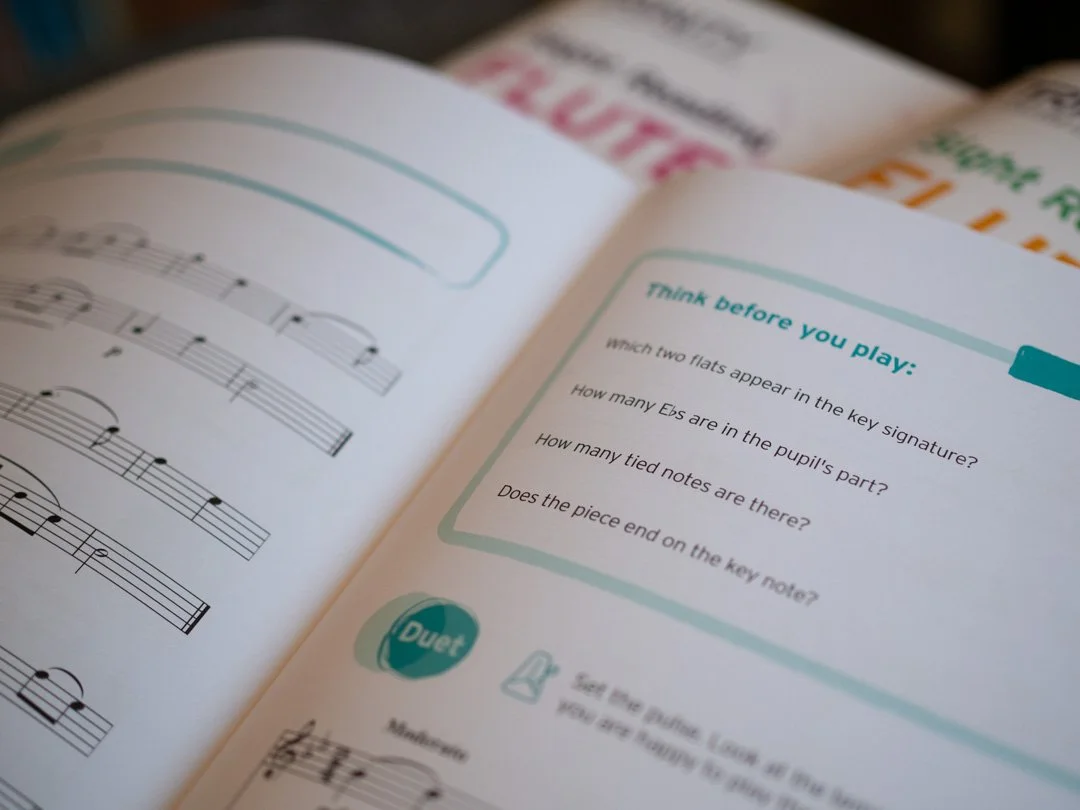
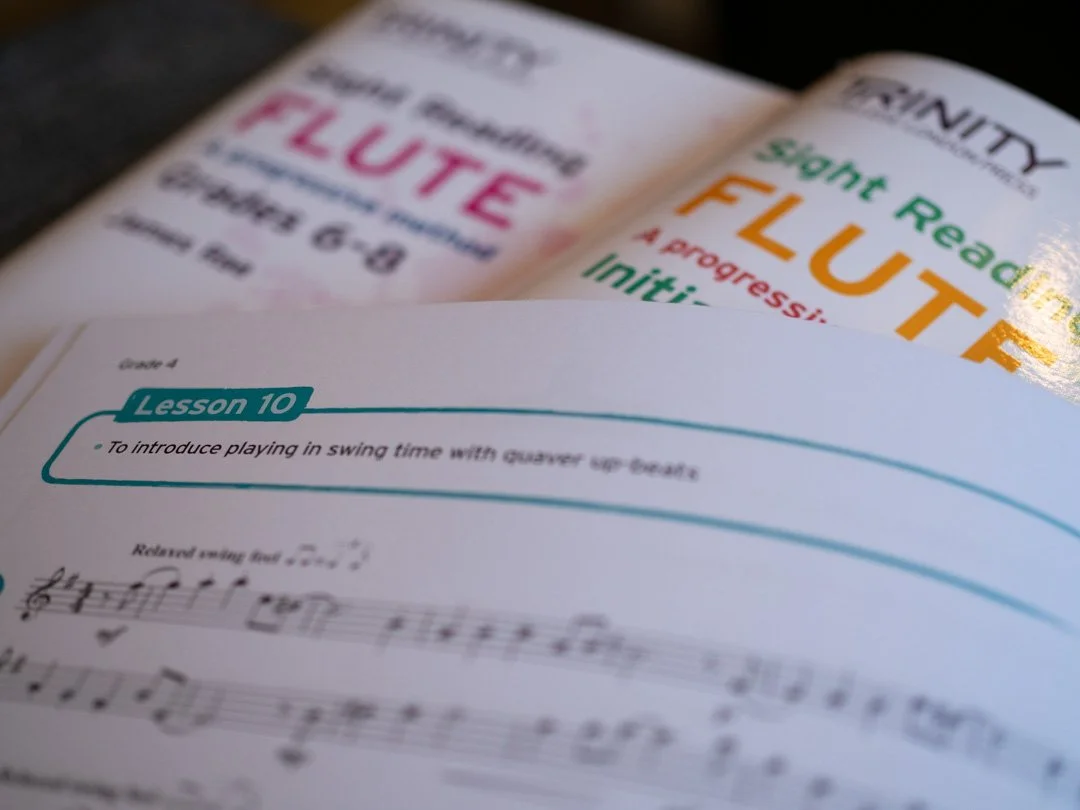
The 10 lessons for each grade cover a range of topics, for example, at Grade 3, introducing swung quavers, and at Grade 7, reading music in the key of F minor. The progression is logical and reflects the requirements Trinity have laid out for their sight-reading tests. I particularly like the student-teacher duet at the end of each lesson, and as per the examples above, the questions which come before them.
I especially liked the progression of the materials in these books, which not only moves logically and thoughtfully, but at a pace which offers students plenty of practice at each new element. As a teacher, I never feel rushed, and I think students feel the same. Each of the 10 sequential lessons build on the previous, and encourage students to demonstrate an increasing degree of knowledge and skill.
Beyond the Exams: Wider Teaching Value
Whilst these books were written and designed to be used alongside Trinity’s practical grade exams, I use them with almost all my flute students, whether they are taking exams or not. Not only do they seek to develop the skills which will be useful for sight-reading, but a whole range of musical and theoretical areas of skill and knowledge, all of which clearly link to the sequential progress of the material.
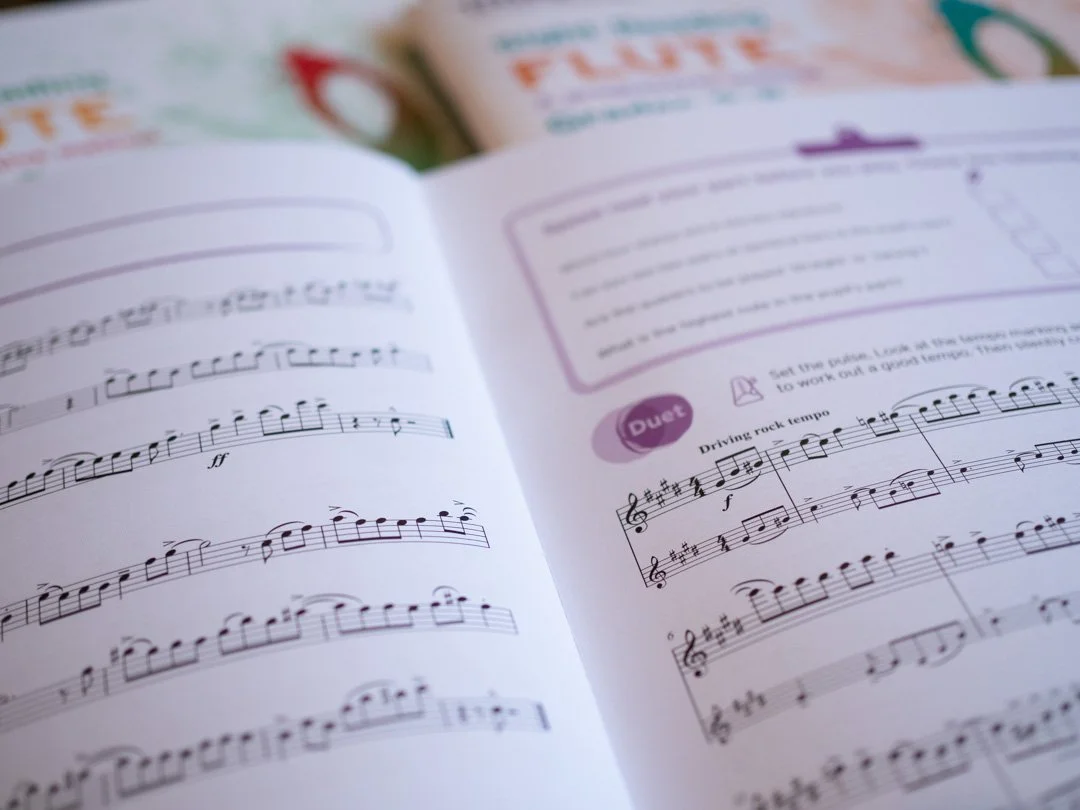
Each book contains 76 pages, and with each one covering three grades, they are excellent value for money. They are clearly presented and laid out, though on balance, the stave size diminishes as students move towards the higher grades. By Book 3, the stave size feels small, particularly with the teacher duet parts given in an even smaller size stave. This is a minor point, and in no way detracts from the overall usefulness of the books.
Final Thoughts
There are few flute sight-reading series available which cover exam requirements as sequentially as these do, and similarly, few prove to be valuable beyond the exams themselves. Flute Sight-Reading: A Progressive Method covers a lot of material, with a huge number of practice exercises included. The material is logically presented throughout with a clear connection to be made between theory and practical work. They are a mainstay of my flute teaching across the board - in fact, they have become some of my most-used books. Highly recommended!
⭐️⭐️⭐️⭐️⭐️
Flute Sight-Reading: A Progressive Method by James Rae, was published in three volumes in 2021 by Trinity College London, RRP £19.85.
I was sent a review copy of this book free of charge; however, this review is my honest opinion as a teacher. You can find my Reviews Policy here.
If this entry in The Notebook has encouraged or supported you, you are warmly invited to buy me a virtual coffee on Ko-Fi. Support starts from just £3 - whether as a simple one-off gift or a monthly subscription - helping this freely offered work to continue and quietly grow.
Star ratings reflect my personal opinion based on usefulness, creativity, presentation, and appeal for teachers and players. I only review publications I can genuinely recommend (3 stars and above):
⭐️⭐️⭐️ Worth exploring - A solid and dependable publication with moments of interest.
⭐️⭐️⭐️⭐️ Recommended - Thoughtful and well-presented; many teachers and players will enjoy using it.
⭐️⭐️⭐️⭐️⭐️ Highly recommended - Beautifully written, inspiring, and one I’ll return to often.

A musically vibrant and fresh edition of Mel Bonis’ Sonata for Flute & Piano, and one that has more than justified its place on my shelves.