
Instrumental Music Education: Developing Pedagogies as Instrumental Teachers | Book Review
There’s an old adage which says that what’s researched in academia stays in academia. This is, perhaps, an unfair assessment, but it does go to highlight the very real tension which exists between academic research and grass roots practice. Whilst those within academia have ready access to such research, disseminating it to a wider audience - particularly at grass roots level - remains a huge challenge.
In the course of my own PhD research, which focussed on autonomy and control in private instrumental teaching, it became clear fairly early on that the amount of research focussing on instrumental teaching, never mind private teaching, was in relatively short supply. Several years on, and with that in mind, any new research which focuses on instrumental teaching is to be welcomed with open arms.
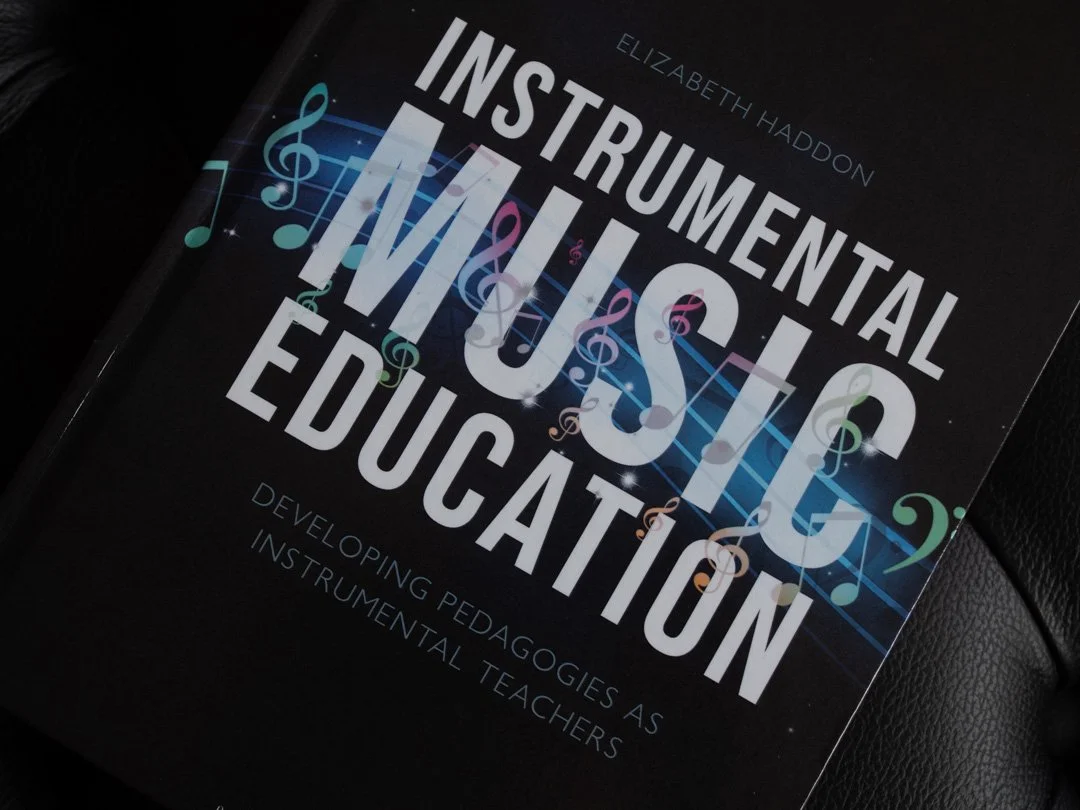
I was therefore thrilled to receive a copy of Instrumental Music Education: Developing Pedagogies as Instrumental Teachers, edited by Elizabeth Haddon. This substantial volume published by Bloomsbury, contains 19 chapters divided into four parts. The book seeks to present insights into instrumental and vocal teaching, including one-to-one and group contexts with learners of varied ages, levels and backgrounds, across cultures and genres.
Part I considers philosophies and personas, Part II explores contexts, roles and relationships, Part III looks at skills-building, and Part IV considers inclusivity, support and resources. There is also an introduction from the book’s editor which considers the overall aims and contexts of the book.
I don’t work in academia, and since completing my PhD in 2020, exist largely outside of it, so perhaps the biggest question for me, and possibly for you, is how accessible is this research - this book - to instrumental and vocal teachers working at grass roots level?
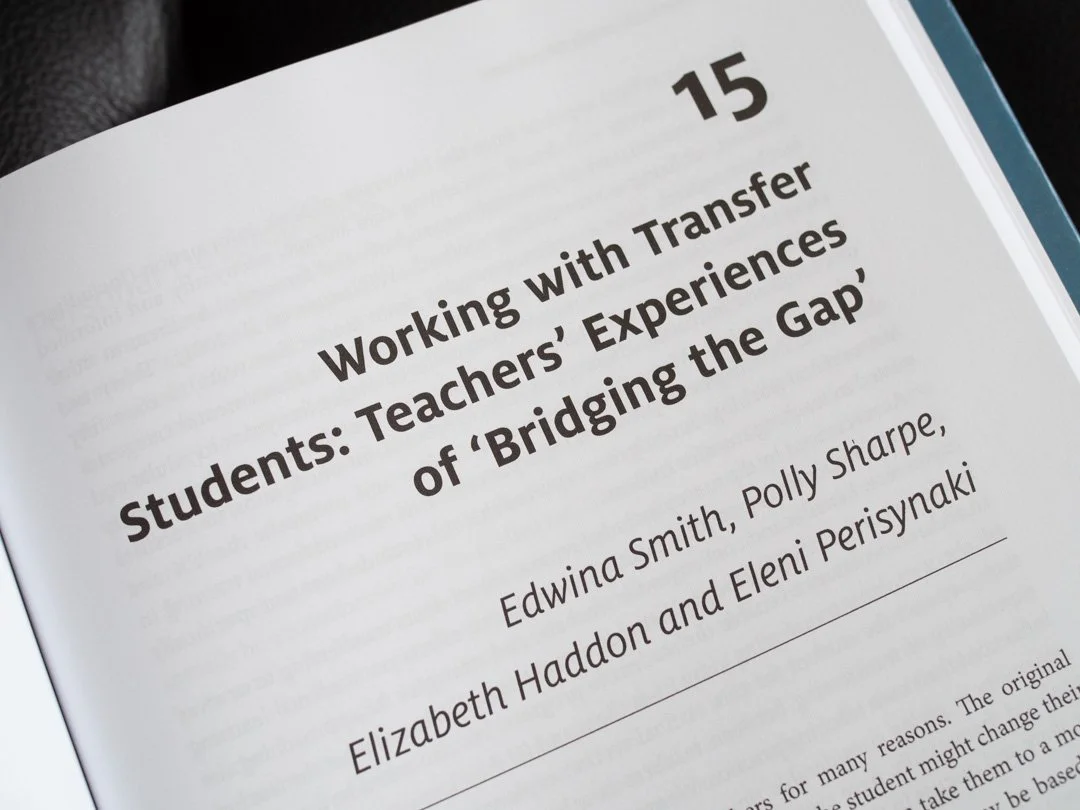
I think the answer to this question might largely lie in the content of the chapters themselves - and I should mention here that most chapters are relatively short, around 12 pages on average, which immediately makes the content digestible in bitesize chunks.
I should acknowledge that for anyone outside of academia, some of the book’s chapter titles might require some unpicking, but don’t let this put you off. Each chapter contains a short, paragraph-long introduction, and this alone gives you a good idea what it’s about. It’s true to say that some themes will be more relevant than others depending on the context in which you teach, but that’s not to say the remainder aren’t interesting.
Authors in Part I explore teacher identity, including what and who influences our approach to teaching, the tensions between teacher-performer and performer-teacher, and the effect that teacher personality and persona has on student-teacher relationships. Part II considers the role of training, work environments, professional development and relationships, and apprenticeships in relation to instrumental music education.
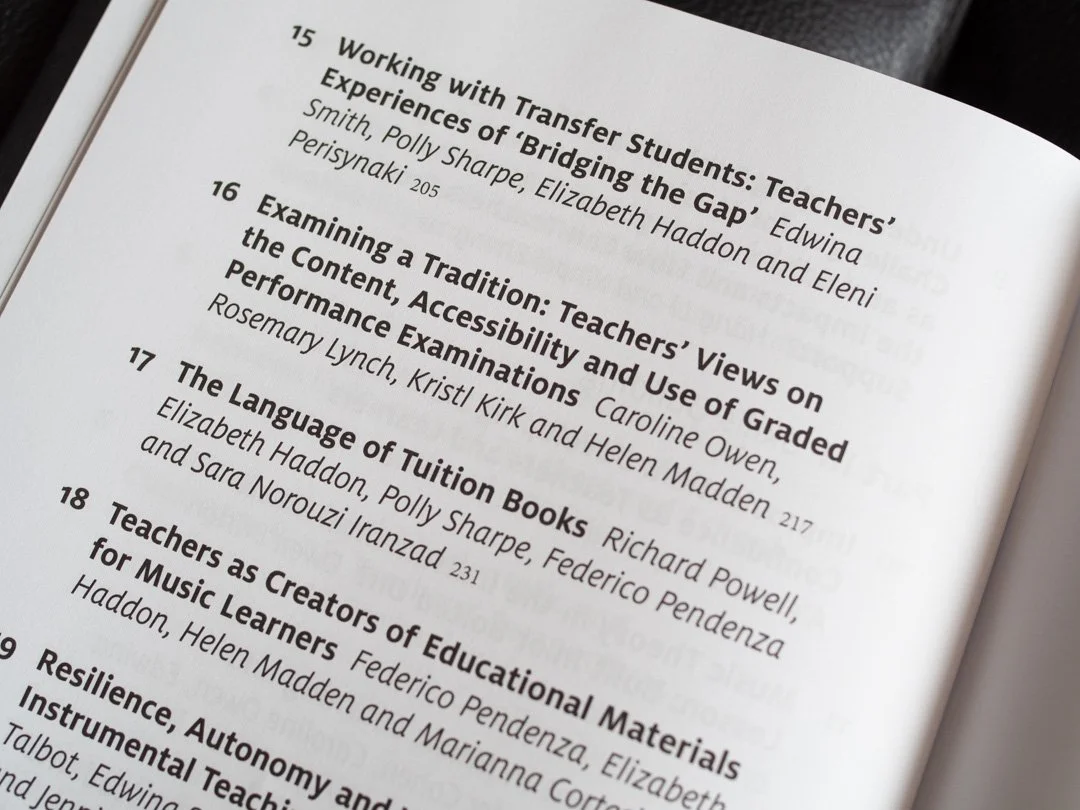
Part II explores skills such as improvisation, music theory, and physical and mental barriers which impact instrumental practice. Finally, Part IV considers transfer students, graded music exams, language, resilience, autonomy, well-being, and students with specific needs. In some respects, Part IV contains the chapters which are generally ‘hot topics’ for instrumental teachers, not least, graded music exams.
Inevitably, the language used feels ‘academic’, but the practical nature of many of the chapters means that concepts and theories are widely explored within real-life teaching contexts. I want to highlight too that this books feels bang up-to-date. The chapter on graded music exams even explores views on digital and live exams, something which, to-date, is a relatively young research topic.
This is a hugely important volume which deserves to be read and explored by those well beyond the walls of academic institutions. The fact that chapters are relatively short and are largely practical in nature means that the book’s contents can be digested in small chunks. The practical nature of the themes explored is important because it will allow teachers working at grass roots level to draw parallels with their own practice and experience.
Building on existing texts, notably by Kim Burwell, the chapters cite a wide variety of authors and sources from around the world. I was thrilled to see that one chapter cites my PhD Research and another a blog post from The Notebook.
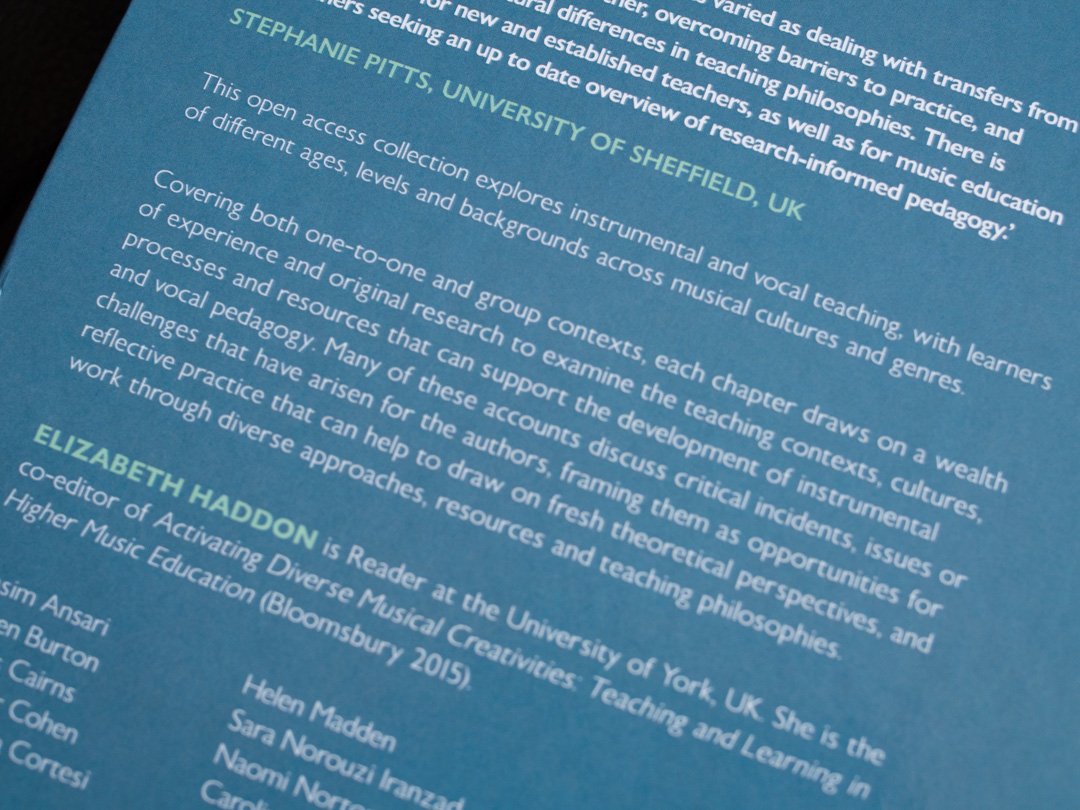
One of the criticisms of academic books, possibly one with some basis, is that they are expensive. Whilst I received a hardback copy to review, I’m pleased to say that Instrumental Music Education is available in paperback for an RRP of £26.99 - an excellent price for such a substantial academic volume. But even better, the whole volume is available free as an eBook on an open access basis, funded by the University of York.
Whatever stage you’re at on your instrumental teaching journey, you will find Instrumental Music Education insightful and thought-provoking. There is much in here to inspire and to encourage teachers to reflect on their own practice. A hugely important book which we shall be returning to for years to come.
⭐️⭐️⭐️⭐️⭐️
Instrumental Music Education: Developing Pedagogies as Instrumental Teachers, was published in 2025 by Bloomsbury, ISBN 9781350408890, RRP £26.99.
I was sent a review copy of this book free of charge; however, this review is my honest opinion as a teacher. You can find my Reviews Policy here.
If this entry in The Notebook has encouraged or supported you, you are warmly invited to buy me a virtual coffee on Ko-Fi. Support starts from just £3 - whether as a simple one-off gift or a monthly subscription - helping this freely offered work to continue and quietly grow.
Star ratings reflect my personal opinion based on usefulness, creativity, presentation, and appeal for teachers and players. I only review publications I can genuinely recommend (3 stars and above):
⭐️⭐️⭐️ Worth exploring - A solid and dependable publication with moments of interest.
⭐️⭐️⭐️⭐️ Recommended - Thoughtful and well-presented; many teachers and players will enjoy using it.
⭐️⭐️⭐️⭐️⭐️ Highly recommended - Beautifully written, inspiring, and one I’ll return to often.

A thought-provoking and practical book that brings current research into the hands of instrumental teachers at every stage of their journey.